Tamerlane: Hero or Monster? Unraveling the Legend of a Historical Conqueror
2/5/20268 min read
The Enigma of Tamerlane
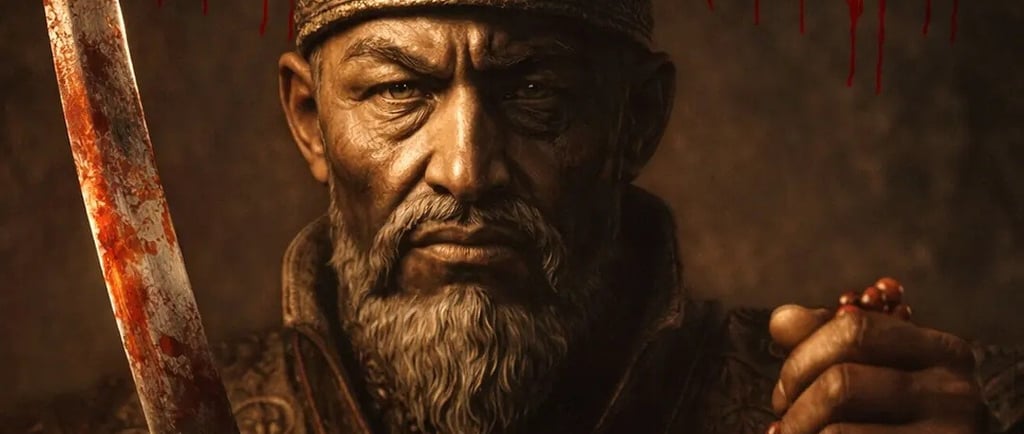
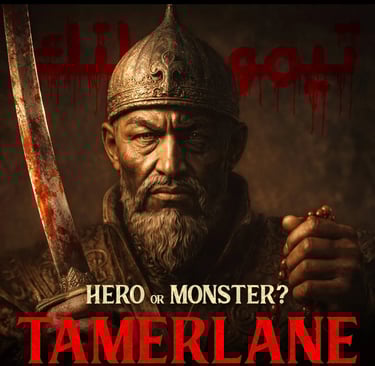
Tamerlane, also known as Timur, stands as one of history's most compelling and controversial figures. Born in 1336 in present-day Uzbekistan, he ascended to power in the late 14th century, leading a campaign of conquest across vast regions of Asia, the Middle East, and Eastern Europe. His legacy has sparked an ongoing debate among historians and scholars regarding the characterization of his life and actions. Was he a celebrated hero who reshaped societies and built magnificent architectural wonders, or a monstrous tyrant whose conquests resulted in unimaginable suffering and destruction?
On one hand, Tamerlane is often revered for his military prowess and strategic brilliance. His ability to forge a vast empire that stretched from the steppes of Central Asia to the fringes of India highlights his role as a formidable conqueror. Under his rule, remarkable architectural advancements took place, particularly in Samarkand, where he established the Timurid Renaissance, leading to a flourishing of culture and artistry that resonates even today. This aspect of his legacy suggests a complex character, embodying both the qualities of a visionary leader and the ruthlessness required to maintain power.
Conversely, Tamerlane's campaigns were marked by extreme brutality. His military tactics often involved violent sieges, mass killings, and the systematic destruction of cities that resisted his rule. Historical accounts depict scenes of gruesome massacres, with estimates of death tolls in the millions. These actions have led many to categorize him as a monster, whose thirst for power led to widespread human suffering. The duality of Tamerlane’s legacy compels us to confront a more nuanced understanding of historical figures, challenging us to ponder the moral implications of their legacies.
A Brief History of Tamerlane
Tamerlane, also known as Timur, was born in 1336 in the region that is now Uzbekistan. He belonged to the Barlas tribe, a nomadic group of Turkic descent, which played a significant role during the rise of the Turco-Mongol empires in Central Asia. His early life was shaped by the sociopolitical complexities of the region, which was experiencing the decline of the Mongol Empire and the fragmentation of its vast territories.
After losing the use of one of his legs due to an injury, which earned him the name Tamerlane, meaning "Timur the Lame," he overcame this physical limitation through sheer determination and military strategy. In the late 14th century, he began to gather followers and build a reputation as a formidable military leader. His thirst for power was fueled by a desire to restore the glory of the Mongol Empire, which had faded in the wake of Genghis Khan's death.
During the 1360s, Tamerlane initiated a series of military campaigns that would lay the groundwork for his future empire. His conquests primarily targeted regions within Persia, the Middle East, and India. One of his notable early victories occurred in 1370 when he captured Samarkand, which became both his capital and the cultural heart of his empire. Tamerlane employed highly innovative military techniques, including the use of cavalry and psychological warfare, allowing him to achieve rapid victories against often larger and better-equipped armies.
As Tamerlane expanded his realm, he became known for his ruthlessness, employing terror as a strategy to intimidate his enemies. His early campaigns culminated in the establishment of a vast empire that stretched from the steppes of Central Asia to parts of the Middle East, influencing the rise and fall of several significant empires. Understanding Tamerlane’s early life and military exploits is crucial to grasping his complex legacy as both a conqueror and a historical figure who left an indelible mark on world history.
The Military Campaigns: Conquests and Battles
Tamerlane, known for his extensive military campaigns across Asia and Europe, exemplified the art of warfare during the late 14th and early 15th centuries. His campaigns were characterized by strategic genius and a formidable display of military might. One of the most notable characteristics of Tamerlane’s conquests was his ability to assemble massive armies, which often exceeded 100,000 troops. This sheer scale not only shocked his adversaries but also provided him with the manpower needed to execute complex military tactics.
One of his significant military achievements was the siege of Delhi in 1398, where he executed a meticulously planned attack. Tamerlane’s forces showcased advanced siege techniques, effectively utilizing artillery and psychological warfare to weaken the city's defenses. The campaign culminated in a decisive victory, resulting in the sacking of Delhi and the establishment of his dominance over the region.
Another key confrontation was the siege of Baghdad in 1401. Tamerlane’s forces employed innovative tactics, including surrounding the city and cutting off essential supplies, which forced a swift capitulation. This victory further cemented his reputation as a ruthless conqueror, as his actions resulted in significant casualties and atrocities against the civilian population.
The battle of Damascus in 1401 also stands out as a critical moment in his military endeavors. Tamerlane skillfully maneuvered his troops and utilized a combination of cavalry charges and deceptive tactics to outmaneuver the significantly larger forces defending the city. His innovative strategies and ability to adapt on the battlefield made him a formidable opponent, ultimately leading to the capture and subsequent devastation of Damascus.
Overall, Tamerlane’s military campaigns highlight not only his prowess as a warlord but also his strategic brilliance in orchestrating movements that would leave a lasting impact on the territories he conquered.
Tamerlane's Impact on Civilizations
Tamerlane, also known as Timur, left a profound legacy that shaped the course of history for many civilizations. His conquests, spanning from the late 14th to early 15th centuries, not only instigated military upheaval but also triggered significant cultural and economic exchanges across the regions he invaded. Regions such as Persia, the Indian subcontinent, and parts of Central Asia experienced extensive transformations due to Tamerlane's unparalleled ambition.
During his campaigns, Tamerlane established a flourishing empire that acted as a conduit for cultural interactions. The cities he constructed, such as Samarkand, became vibrant centers where art, science, and trade converged. His patronage of the arts led to the revival of Persian literature and the enhancement of architecture, resulting in magnificent structures exemplified by the Registan complex in Samarkand. This groundwork laid by Tamerlane would ultimately influence subsequent generations, blending various cultural elements into a rich tapestry of artistic expression.
Economically, Tamerlane's empire functioned as an integral link between the East and West. By revitalizing the Silk Road, he facilitated the exchange of goods, ideas, and innovations. Merchants traversed his territories, bringing wealth and knowledge which enriched the local cultures. However, the duality of Tamerlane's impact is evident when considering the destructiveness of his military campaigns. Entire cities were razed during his conquests, and countless lives were lost. This expansive network of roads and cultural bridges, while fostering cooperation and mutual respect, also came at a considerable cost.
The legacy of Tamerlane therefore inspires debate regarding cultural preservation versus destruction. While he undeniably contributed to advancements in art and architecture, the human toll of his conquests raises essential questions about the ethical implications of his reign. Consequently, Tamerlane's history presents a complex interplay between heroism and tyranny, leaving an indelible mark on the civilizations he touched.
The Atrocities Committed: A Monster's Legacy?
Tamerlane, known for his military prowess and conquests, also leaves behind a legacy marked by brutality and bloodshed. Historical records and firsthand accounts reveal the darker aspects of his rule, which present Tamerlane not merely as a conqueror but as a figure who instigated widespread atrocities. The scope of violence perpetrated during his campaigns is often shocking, as he employed ruthless tactics to secure his dominance.
One of Tamerlane's most notorious acts was the systematic slaughter of entire populations. For instance, after his sieges of cities such as Nishapur in 1381, where he reportedly ordered the execution of approximately 1.7 million individuals, the scale of the carnage raises critical ethical questions about leadership and warfare. Such mass killings were not mere incidents of collateral damage but rather strategic moves to instill fear and obliterate any potential resistance.
Furthermore, accounts highlight the displacement of vast numbers of people as Tamerlane's forces advanced. Families were uprooted from their homes, forcibly relocating on perilous journeys to avoid the impending wrath of his armies. This disruption of life extended beyond the immediate casualties, creating long-lasting impacts on the cultural and demographic fabric of regions that fell under his dominion.
In addition to the physical devastation, the cities conquered by Tamerlane often faced complete annihilation. Architectural marvels were destroyed, and cultural artifacts were looted or desecrated, signalizing a profound disregard for the rich legacies of the civilizations he overcame. Historical sources depict these actions as emblematic of a leader who wielded power with an iron fist, reminding modern observers of the moral implications entwined with unbridled ambition.
The Dichotomy of Hero and Monster
The legacy of Tamerlane, often referred to as Timur, elicits a conversation steeped in complexity due to the contrasting narratives that surround his life and conquests. Historians and cultural commentators debate whether Tamerlane should be memorialized as a national hero or condemned as a ruthless tyrant. This duality is reflective of how personal and societal values influence historical interpretation, a phenomenon that remains pertinent in contemporary discussions about historical figures.
In central Asia and parts of the Middle East, Tamerlane is celebrated as a pivotal figure who united various factions and contributed to the flourishing of culture and architecture during his reign. His ability to forge a vast empire is often interpreted as heroic, especially within the context of nationalist sentiments that emphasize unity and pride in national history. Some historians view his military tactics not merely as brutalities but as necessary actions during a tumultuous period marked by conflict and instability.
Conversely, in the regions impacted directly by his military campaigns, including India and Persia, Tamerlane's legacy is frequently overshadowed by the devastation he wrought. His conquests, characterized by mass slaughter and devastation, give rise to narratives that paint him as a ‘monster’. These differing perspectives highlight how cultural contexts can alter the understanding of figures like Tamerlane, suggesting that nationalism heavily influences local perceptions of historical events.
Moreover, the narratives constructed around Tamerlane illustrate the broader trends in historiography, wherein personal biases, cultural backgrounds, and political motivations shape historical memory. This dichotomy serves as a reminder of the complexities involved in interpreting historical figures and events, urging a deeper engagement with the array of factors that inform our understanding of Tamerlane's legacy.
Conclusion: The Lasting Legacy of Tamerlane
The character of Tamerlane, often framed as either a hero or a monster, presents a complex narrative that invites ongoing debate. His remarkable conquests and tactical genius established an empire that spanned vast territories, bringing an unprecedented level of cultural and economic exchange in the regions he controlled. However, the immense brutality that accompanied his campaigns, where millions lost their lives, orchestrates a disturbing juxtaposition in how he is remembered. This duality encapsulates the essence of his legacy, challenging our perceptions of morality and leadership.
As we reflect on Tamerlane's life, important questions arise: Do we define a leader’s success purely by their victories and territorial expansions, or do we also weigh the ethical implications of their methods? History has a tendency to categorize figures into simplified archetypes, often neglecting the multifaceted nature of their actions and the motivations behind them. Tamerlane, like many historical figures, embodies both the ambition for power and the moral dilemmas inherent in pursuing such dreams.
The enduring interpretations of Tamerlane's legacy highlight a crucial aspect of historiography: that the context in which history is recorded and remembered heavily influences our judgments. Future generations may continue to debate his actions, oscillating between the admiration for his leadership and the horror of his methods. This ambiguity calls us to consider the balance of power and the ethics of governance in our own time, and how the narratives surrounding historical figures evolve. In contemplating Tamerlane, we are reminded that history often refuses to provide straightforward answers, reflecting instead the complexities of humanity itself.
rizwan@muznagroup.com
© 2025. All rights reserved.